
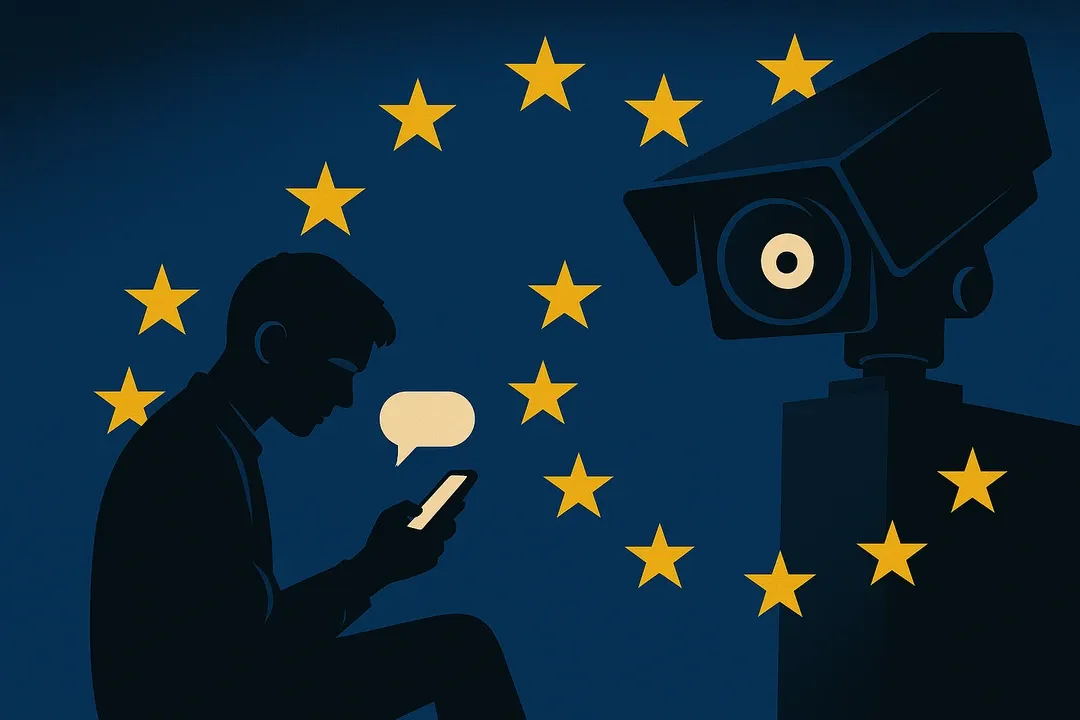
EU Chat Control: The Battle Over Your Private Messages
The Plan to Scan Your Messages
For months, a proposed EU law known as "Chat Control" has been the subject of a major debate. The plan, which would scan private messages to fight child abuse, has faced strong opposition over privacy concerns. The story of its journey is a dramatic one of shifting alliances and public pressure.
The Beginning of the Push
The European Commission first proposed the Chat Control law in May 2022. The goal was to require email and messaging apps to scan all private communications for illegal material. However, critics warned this would mean the end of private conversations and secure end-to-end encryption.
When Denmark took over the EU leadership in July 2025, it made passing this law a top priority.
Growing Opposition and Public Anger
Throughout the summer of 2025, a "blocking minority" of countries emerged to stop the law. Nations like Germany, the Czech Republic, Finland, and Estonia publicly stated their opposition. They argued that scanning everyone's private messages was like "preemptively opening all letters" - a form of mass surveillance they could not accept.
At the same time, a public campaign against the law grew quickly. Websites like fightchatcontrol.eu were launched to inform people and rally opposition, leading to significant public backlash.
A Surprise Shift and a Secret Compromise
The situation took a surprising turn. In late October 2025, the Danish proposal was changed - it appeared to soften, saying that scanning would be "voluntary" for companies, not mandatory.
But just two weeks later, on November 11th, a new compromise text was supported behind closed doors. This new version, dubbed "Chat Control 2.0," was seen as even more intrusive. It was designed to effectively bring back the scanning of all messages, including encrypted ones, while also outlawing anonymous communication.
A Partial Victory for Privacy
This move caused an uproar. In response to the strong opposition, the Danish presidency was forced to change its plan again.
On November 12th, a revised text was introduced that included a crucial line: it explicitly states that nothing in the law imposes mandatory scanning on providers. This means the core of the original Chat Control plan - forcing companies to scan all messages - has been excluded for now.
What Happens Next?
This updated proposal is now heading for final approval by the EU Council. After that, the real negotiations will begin between the Council, the European Parliament, and the Commission. The battle over Chat Control is not over. While the immediate threat of mandatory scanning has been avoided, the fight to balance child protection with the right to a private conversation continues.
What Is the Real Motive Behind This Law?
While this has been presented as a tool against child abuse, many technology and legal experts question the true motives of the proposal. There are three key reasons for concern:
1. A Flawed Solution to the Stated Problem
The proposal lacks credible evidence that mass-scanning private communications is an effective way to combat child abuse. Experts argue that criminals would simply move to encrypted platforms outside the EU or use simple code words to evade detection. The most horrific material is often shared on the dark web, not in public or mainstream private chats. This makes the proposed method a blunt instrument that invades everyone's privacy while likely missing its actual target.
2. The Creation of a Mass Surveillance Infrastructure
The most significant concern is that this law would fundamentally change the relationship between the state and its citizens. By mandating the scanning of all digital communication, it establishes a permanent surveillance infrastructure. Once this system is in place, the temptation for governments to use it for other purposes could be immense. This could include:
- Monitoring political dissent and activists.
- Combating terrorism or "domestic extremism" under broadly defined terms.
- Tax enforcement or tracking general public sentiment.
3. A Broad Scope
A tool built for one purpose can easily be expanded for others. A future crisis - be it a pandemic, civil unrest, or a security threat - could be used as a justification to widen the scanning targets without a new public debate. What begins as a hunt for one type of illegal content could become a tool for general law enforcement and political control, fundamentally undermining private life in the digital age.


